
 FIRST CHURCH OF CHRIST, LANCASTER, MA
 BACK TO RESULTS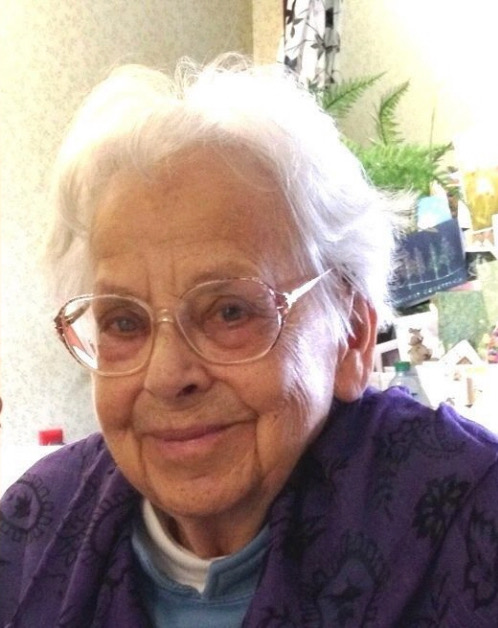
Named after her grandmother, Mary Whitmore was born on July 24, 1921, and grew up on the family farm in North Sunderland, Massachusetts where she went to elementary school in the same small schoolhouse as her father. Here, her life-long connection with nature, thirst for knowledge, and devotion to community service and education were inspired and cultivated by her parents. She learned the night sky and to “bird by ear” from her mother and her father taught her about native plants, geology, and work on the farm.
After attending Northfield School for Girls, Mary moved east and studied at Wellesley College, as had her mother, grandmother, and later her daughter Martha. She wrote her senior thesis on the “ecosystem” of Observatory Hill at Wellesley, more than a decade before the first ecology textbook was published. Upon graduating, she learned to code “computers” at IBM and was recruited by MIT’s Center of Analysis to code a secret wartime project, which she determined was related to weather prediction in preparation for D-Day.
Mary met her husband of sixty-six years, the late Professor Frank A. McClintock, at a square dance and married on September 10th, 1944. The two were founding settlers of the progressive Conantum housing community in Concord, Massachusetts, where they raised four children and were integral to the social fabric of the neighborhood.
An adventurous mother, Mary enjoyed a wide variety of outdoor activities, but perhaps found the greatest joy in gathering the family for a drive to a hill nearby to smell the apple blossoms and watch the sunset. Her belief in the importance of preserving land for future generations led her to dedicate a portion of the woods surrounding the family farm back in Sunderland to conservation and public use.
Mary held a strong belief that environmental education was for all ages. She taught nature in First Parish of Concord’s nursery school and was a leader in the “Birds Go to School” program in Boston’s urban schools. She trained teachers at the Elbanobscot Foundation and developed “Armchair Naturalist,” a course for adults aged 80 to 94. Affectionately dubbed the legendary “nature lady,” Mary taught field natural history courses for the Thoreau Lyceum, the Concord Public Schools, and Concord Adult Education. She shared her vast knowledge of Henry David Thoreau‘s journals with her students, walking and pausing in the same places around Walden Pond that Thoreau wrote about.
Always finding time to “stop and smell the flowers,” Mary delighted in sitting outdoors for hours taking in the sights, sounds, and scents, just as much as she relished exploring the road unknown.
Following her death in 2013, the Mary W. McClintock Collection was added to the Concord Free Public Library‘s William Munroe Special Collections.