
 FIRST CHURCH OF CHRIST, LANCASTER, MA
 BACK TO RESULTS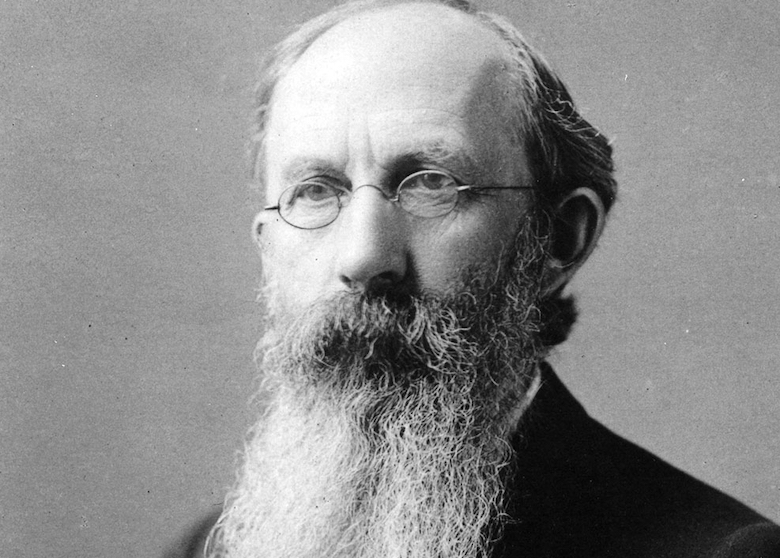
Regarded as the inventor of standardized paper patterns for clothing, Ebenezer Butterick (1826-1903) revolutionized the way in which Americans were dressed. His Butterick Publishing Company distributed the first graded sewing patterns allowing for non-professionals to make their own clothing, while also making it easier for tailors to do so.
Born in Sterling, Massachusetts, Butterick’s father was a farmer and carpenter. An active and leading citizen, he was the principal founder of a Universalist Society in Sterling. He was educated in the common schools of Sterling and at Leicester Academy. In his youth, Butterick apprenticed as a tailor in Worcester, Massachusetts, later establishing himself as a merchant tailor in Sterling, Leominster, and Fitchburg where he established a pattern factory. This was later moved to Brooklyn, New York.
Butterick’s first patterns were folded by members of his family. They were packed in boxes, each containing one hundred patterns, and were sold at a wholesale price of $10 per box; $25 retail. The first small purchases were made in Shirley, Massachusetts.
In 1869, to promote pattern sales, Butterick founded the fashion magazine, Metropolitan. In 1881 the Butterick Publishing Company was established, and subsidiary offices established in this country and abroad. The praise of Butterick patterns was widespread, their appeal mostly to women, whose “convenience and economy and taste they had preeminently served.”
In ill health, Butterick returned to Sterling. By 1899, his participation in the business has ceased. Following a short illness, he died March 31, 1903, and was buried in Leominster, Massachusetts.
Deeply philanthropic, during his lifetime Butterick was formally associated with the Metropolitan Art Museum, the Brooklyn Institute of Arts and Sciences, the Brooklyn Guild, and the American Unitarian Association.